Last Updated on September 13, 2026 by Caesar Fikson
Walk into a casino anywhere in the world and you’ll spot them: a rabbit’s foot clipped to a keyring, a small jade figurine tucked into a jacket pocket, a coin rubbed smooth from years of handling before every hand. No lucky charm has ever been proven to change the odds on a roulette wheel, but that’s never stopped gamblers from carrying one — and the charm they reach for says a lot about where they’re from.
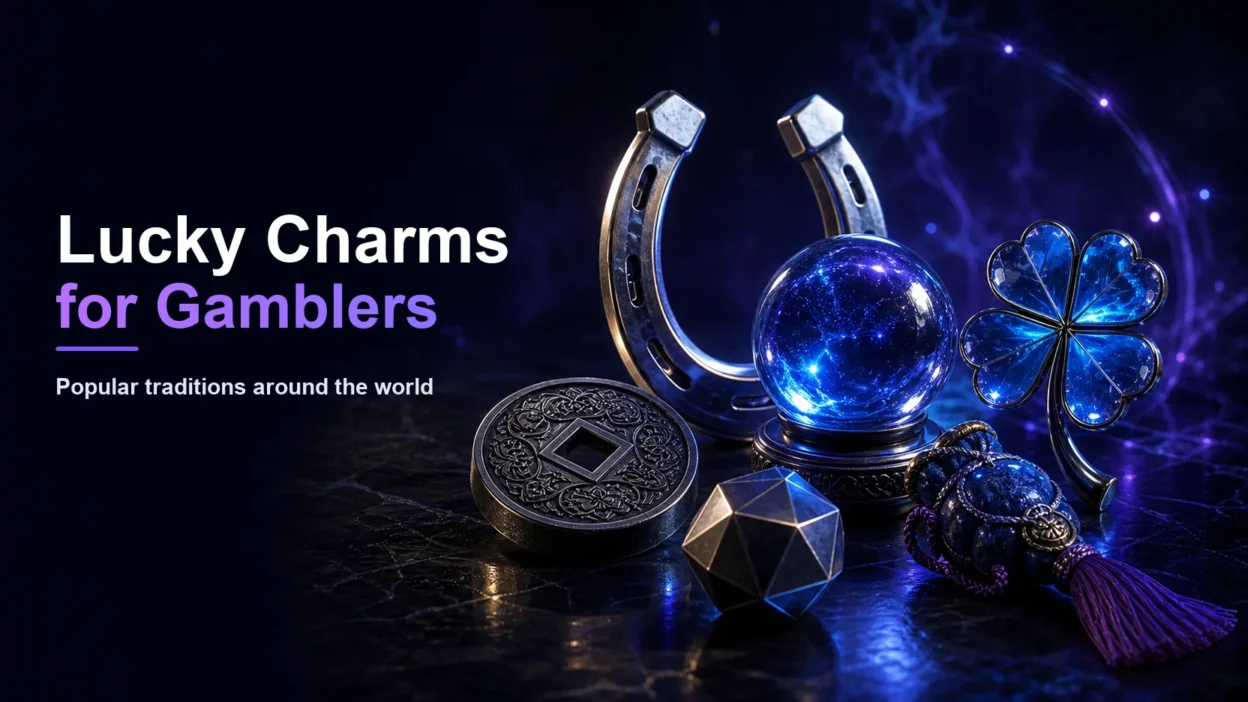
This guide rounds up 30 of the most widely recognized gambling lucky charms from around the world, roughly ordered from the most globally familiar to the more regionally specific, with the country or culture each one comes from.
Quick Reference: 30 Lucky Charms by Country of Origin
| # | Charm | Country / Region of Origin |
|---|---|---|
| 1 | Four-Leaf Clover | Ireland |
| 2 | Horseshoe | United Kingdom / Ireland |
| 3 | Maneki-Neko (Beckoning Cat) | Japan |
| 4 | Laughing Buddha | China |
| 5 | Rabbit’s Foot | United States |
| 6 | Hamsa Hand | Middle East / North Africa |
| 7 | Nazar Boncuğu (Evil Eye) | Turkey |
| 8 | Red Envelope (Hongbao) | China |
| 9 | Three-Legged Toad (Jin Chan) | China |
| 10 | Elephant Figurine | India / Thailand |
| 11 | Ganesha Statue | India |
| 12 | Wishbone | United States / United Kingdom |
| 13 | The Number 7 | United States (Western casino culture) |
| 14 | The Number 8 | China |
| 15 | Carp Scale | Poland / Czechia / Slovakia |
| 16 | Cat’s Eye Gem | South / Southeast Asia |
| 17 | Acorn | Scandinavia |
| 18 | Upside-Down Fu Character | China |
| 19 | Chinese Coin with Square Hole | China |
| 20 | Scarab Beetle | Egypt |
| 21 | Amber | Lithuania / Latvia (Baltic States) |
| 22 | Ladybug | Continental Europe |
| 23 | Buckeye Nut | United States (Ohio) |
| 24 | Barcelos Rooster | Portugal |
| 25 | Figa (Mano Fico) | Italy / Brazil |
| 26 | Milagros | Mexico |
| 27 | Feng Shui Turtle | China |
| 28 | Lucky Bamboo | China |
| 29 | St. Christopher Medal | Southern / Western Europe |
| 30 | Dreamcatcher | United States / Canada (Ojibwe origin) |
The 30 Charms, In Detail
1. Four-Leaf Clover — Ireland
The most globally recognized luck symbol of all, the four-leaf clover owes its fame to Irish tradition, where an ordinary three-leaf clover already carried Christian symbolism before a rare fourth leaf turned it into a sign of exceptional fortune. Genuine four-leaf specimens are scarce — commonly cited odds put finding one in the wild at roughly 1 in 5,000 — which only reinforced the idea that whoever holds one has been singled out for good luck. It’s become such a shorthand for fortune that it now appears as a recurring symbol on slot machines worldwide, clover-themed and all.
2. Horseshoe — United Kingdom / Ireland
Horseshoe folklore in the British Isles traces back to legends of a blacksmith outwitting the devil, after which iron horseshoes were nailed above doorways to keep bad luck out. The debate over which way to hang one — points up to “hold” the luck in, or points down to pour it over everyone who passes beneath — has never fully settled, but gamblers who carry a miniature horseshoe charm tend to favor the “cup” position, keeping the open end facing upward.
3. Maneki-Neko (Beckoning Cat) — Japan
The raised-paw cat figurine seen in shop windows and pachinko parlors across Japan dates back to the Edo period and is believed to “beckon” good fortune toward its owner. A raised left paw is said to draw in customers, while a raised right paw calls in money — which is exactly why a gold Maneki-Neko with its right paw up is a favorite among gamblers looking for a financial edge, even though its more prominent role is as a business charm rather than a personal one.
4. Laughing Buddha — China
Often confused with a religious icon, the Laughing Buddha (also called Budai or Hotei) is technically a folk figure — a jolly, round-bellied monk associated with abundance and contentment rather than a Buddhist deity in the strict sense. Rubbing his belly is said to transfer some of his good fortune to you, and statues holding a sack of gold or a pot of coins are specifically chosen by gamblers hoping to tip the odds toward prosperity.
5. Rabbit’s Foot — United States
One of the most recognizable lucky charms in American folklore, the rabbit’s foot carries roots that stretch back through African American hoodoo traditions and European folk belief, both of which held that rabbits’ connection to the earth (and their prolific breeding) made their feet powerful luck totems. Superstition typically specifies it should be the left hind foot for the charm to work — a detail most casual keychain versions today simply ignore.
6. Hamsa Hand — Middle East / North Africa
Shaped like an open right palm, often with an eye set in the center, the Hamsa (also called the Khamsa) is one of the oldest protective symbols still in everyday use, appearing in Jewish, Islamic, and broader Middle Eastern traditions with slightly different meanings in each. Its core purpose is defensive — warding off the evil eye and bad energy — which makes it popular with gamblers less as a luck-generator and more as protection against a losing streak they believe was caused by someone else’s envy.
7. Nazar Boncuğu (Evil Eye) — Turkey
The concentric blue-and-white glass eye sold throughout Turkish markets works on a similar principle to the Hamsa: it reflects envious or ill-wishing glances back at whoever cast them. Gamblers on a hot streak sometimes carry one specifically to guard against the “evil eye” of jealous onlookers, on the theory that too much visible good fortune attracts unwanted attention — and unwanted attention is exactly what a Nazar is built to deflect.
8. Red Envelope (Hongbao) — China
Traditionally given during Lunar New Year and other celebrations, the red envelope holds money as a gift, but its color and shape have made it a standalone luck symbol in its own right. Red represents prosperity and warding off misfortune in Chinese tradition, and it’s common to see gamblers tuck a small red envelope — sometimes empty, sometimes holding a single lucky bill — into a pocket before heading to the tables.
9. Three-Legged Toad (Jin Chan) — China
Also known as the “money toad,” this three-legged bullfrog figurine with a coin in its mouth is a Feng Shui staple believed to attract wealth and protect it once earned. Folklore holds that it appears near households about to receive good news, and some gamblers place lottery tickets directly beneath the statue overnight, treating it as a small ritual for improving their odds before a draw.
10. Elephant Figurine — India / Thailand
Across South and Southeast Asia, elephants symbolize strength, wisdom, and good fortune, and small elephant figurines are a common household and personal charm. The trunk position matters: an elephant with its trunk raised is considered the luckiest orientation, believed to “spray” good fortune outward the way a real elephant sprays water, and it’s this upward-trunk version gamblers specifically seek out.
11. Ganesha Statue — India
The elephant-headed Hindu deity Ganesha is worshipped as the remover of obstacles, invoked at the start of any new venture — including, informally, a night at the tables. A small Ganesha statue or pendant is less a pure “luck” charm than a request for a smoother path forward, which is precisely why gamblers reach for one before a big bet rather than during a winning streak already in progress.
12. Wishbone — United States / United Kingdom
The tradition of two people pulling apart a dried poultry wishbone, with whoever gets the larger piece earning a wish, goes back centuries in English-speaking folk custom. Miniature metal or resin wishbone charms, worn as jewelry or carried loose, let a gambler keep the “winning half” symbolism on hand without needing an actual turkey dinner first.
13. The Number 7 — United States (Western Casino Culture)
Not an object but a number, 7 is arguably the most universally recognized lucky number in Western gambling culture, cemented by its role as the top slot machine symbol and the best possible roll in craps on the come-out. Its lucky status predates casinos by centuries, rooted in religious and numerological traditions, but modern slot design did more than anything else to fuse the number permanently with the idea of a jackpot.
14. The Number 8 — China
In Chinese, the pronunciation of “eight” (bā) closely resembles the word for prosperity or wealth (fā), which has made 8 the most sought-after number in Chinese culture — reflected in everything with room numbers to license plates. Gamblers of Chinese heritage will often specifically choose bet amounts, table numbers, or room numbers containing multiple 8s when given the option, treating the number itself as a portable luck charm.
15. Carp Scale — Poland / Czechia / Slovakia
Carp is the traditional centerpiece of Christmas Eve dinner across much of Central Europe, and it’s become custom in Poland, Czechia, and Slovakia to save a single scale from the fish and carry it in a wallet for the following year, believed to keep money flowing steadily. It’s a quieter, more domestic charm than most on this list — you won’t find carp-scale merchandise in a casino gift shop — but it remains genuinely practiced in households throughout the region.
16. Cat’s Eye Gem — South / Southeast Asia
Named for the narrow band of reflected light that mimics a feline pupil, this chatoyant gemstone is prized across South and Southeast Asian gem traditions for its supposed ability to guard wealth and ward off misfortune. It’s frequently set into rings worn specifically by business owners and gamblers, chosen for its reputation for stabilizing finances rather than delivering sudden windfalls.
17. Acorn — Scandinavia
In Norse-influenced Scandinavian folklore, the oak tree was sacred to Thor, and the acorn — as the oak’s seed — inherited a reputation for protection and resilience, particularly against storms. Carrying an acorn charm eventually broadened into general good-luck symbolism, and small acorn pendants remain a common, understated lucky token throughout the Nordic countries.
18. Upside-Down Fu Character — China
The Chinese character Fu (福), meaning fortune or blessing, is often displayed upside down on doors and walls during Lunar New Year — a deliberate pun, since “upside down” (dao) sounds identical to “arrive” (dao) in Mandarin, turning the inverted character into a wish that good fortune has arrived. Small Fu pendants, right-side up or inverted, are carried year-round as portable versions of the same wish.
19. Chinese Coin with Square Hole — China
Old Chinese coins, cast with a round outer edge and a square hole through the center, are a classic Feng Shui wealth symbol — the round and square shapes representing heaven and earth respectively. Strung together on red cord or carried loose in a pocket, they’re one of the most recognizable East Asian money charms, often gifted specifically to someone heading into a high-stakes situation.
20. Scarab Beetle — Egypt
Ancient Egyptians associated the scarab beetle with the sun god Ra and the concept of rebirth, based on the insect’s habit of rolling dung into balls — mirrored, in Egyptian belief, by the sun rolling across the sky each day. Scarab amulets were placed in tombs for protection in the afterlife, and the symbol has since carried over into modern jewelry as a general charm for renewal and good fortune, including among gamblers hoping for a turnaround after a losing streak.
21. Amber — Lithuania / Latvia (Baltic States)
Fossilized tree resin washed up along Baltic Sea shorelines for thousands of years, amber holds deep cultural significance across Lithuania and Latvia, traditionally believed to carry protective and healing properties. Small amber pendants are commonly worn as all-purpose good luck charms in the region, prized as much for their warm, sun-like color as for the folklore attached to them.
22. Ladybug — Continental Europe
Across much of continental Europe, a ladybug landing on you is considered a sign of imminent good fortune, with folklore in Germany, France, and elsewhere linking the insect to the Virgin Mary (hence names like “Marienkäfer,” or “Mary’s beetle,” in German). Ladybug-shaped charms and pins have become a lighthearted, family-friendly luck symbol, popular enough to show up on everything from children’s jewelry to casino-themed merchandise.
23. Buckeye Nut — United States (Ohio)
The glossy brown nut of the Ohio buckeye tree has been carried as a pocket luck charm in the American Midwest for generations, believed to ward off rheumatism and bring general good fortune to whoever keeps one close. It’s a distinctly regional charm compared to most on this list — strongly tied to Ohio identity — but it persists as a genuine folk tradition rather than a manufactured novelty item.
24. Barcelos Rooster — Portugal
Portugal’s national folk symbol comes from a legend involving a wrongly accused man saved when a roasted rooster miraculously crowed to prove his innocence. Beyond its role as a broader symbol of Portuguese identity, the brightly painted rooster figurine is treated as a good luck token in general, including by gamblers who keep a miniature version as a nod to fortune favoring the wrongly doubted.
25. Figa (Mano Fico) — Italy / Brazil
This clenched-fist charm, with the thumb tucked between the index and middle fingers, has roots in ancient Roman and Etruscan tradition and remains widely worn today in both Italy and Brazil, where it’s often called the “figa.” Its purpose is primarily protective — warding off the evil eye — and it’s a common gift given specifically for good fortune around risky or uncertain undertakings.
26. Milagros — Mexico
Small metal charms shaped like body parts, animals, or everyday objects, milagros (“miracles”) are traditionally offered at shrines in Mexico and elsewhere in Latin America as a request for divine help with a specific concern. While their primary use is devotional rather than gambling-specific, it’s common for someone facing a big financial risk to carry a milagro shaped like a hand or a heart as a personal token of hoped-for luck.
27. Feng Shui Turtle — China
The turtle holds a place among the four celestial animals in Chinese tradition, symbolizing longevity, stability, and steady accumulation of wealth rather than sudden windfalls. A small turtle figurine, often placed facing a room’s entrance, is used less for one big win and more as a symbol of building fortune slowly and protecting what’s already been earned — a somewhat more conservative charm philosophy than most on this list.
28. Lucky Bamboo — China
Despite the name, lucky bamboo is botanically unrelated to true bamboo — it’s a species of Dracaena, prized in Feng Shui practice for its resilience and easy indoor growth. Stalks are typically arranged in specific numbers, each carrying its own meaning (three stalks for happiness, eight for wealth), and small potted arrangements are a common desk or home charm for those hoping to keep fortune flowing steadily.
29. St. Christopher Medal — Southern / Western Europe
St. Christopher, the patron saint of travelers in Catholic tradition, is honored through a medal worn primarily for safe passage rather than gambling luck specifically. Its adoption as a broader good-luck charm — including by gamblers traveling to a casino or on a betting trip — grew out of the same instinct behind most travel charms: protection during the journey extends naturally into hope for a favorable outcome once you arrive.
30. Dreamcatcher — United States / Canada (Ojibwe Origin)
Originating with the Ojibwe people and later adopted more broadly across North America, the dreamcatcher was traditionally meant to filter out bad dreams while letting good ones pass through to the sleeper. Its use as a general-purpose luck and protection symbol grew significantly in the 20th century, and small dreamcatcher charms are now carried by some gamblers as a request to filter out bad fortune the same way the original was meant to filter out bad dreams.
Frequently Asked Questions
What is the most popular lucky charm among gamblers worldwide?
The four-leaf clover and the horseshoe are the two most globally recognized gambling luck symbols, both rooted in Irish and British folklore, though their popularity as literal carried objects varies significantly by region and casino culture.
Do different countries have different lucky numbers for gambling?
Yes. The number 7 is the dominant lucky number in Western gambling culture, largely due to slot machine design and craps. In Chinese culture, the number 8 holds far greater significance because its pronunciation resembles the word for prosperity, making it the preferred number for bet sizes, table choices, and room numbers wherever possible.
Are gambling lucky charms meant to attract luck or ward off bad luck?
Both, depending on the charm. Symbols like the Hamsa Hand, Nazar Boncuğu, and Figa are primarily protective, designed to deflect envy or misfortune, while charms like the four-leaf clover, Maneki-Neko, and Chinese coins are aimed at actively attracting good fortune and wealth.
Final Thoughts
No charm on this list has ever been shown to influence a shuffled deck or a spinning wheel — the odds at a casino table stay exactly the same whether or not you’re carrying a rabbit’s foot. What these charms actually deliver is something less measurable but still real: a sense of control and calm heading into a situation defined by chance, wrapped in centuries of cultural meaning specific to wherever you’re from. That’s arguably worth more than any marginal edge a charm could never provide anyway.