Market Guide
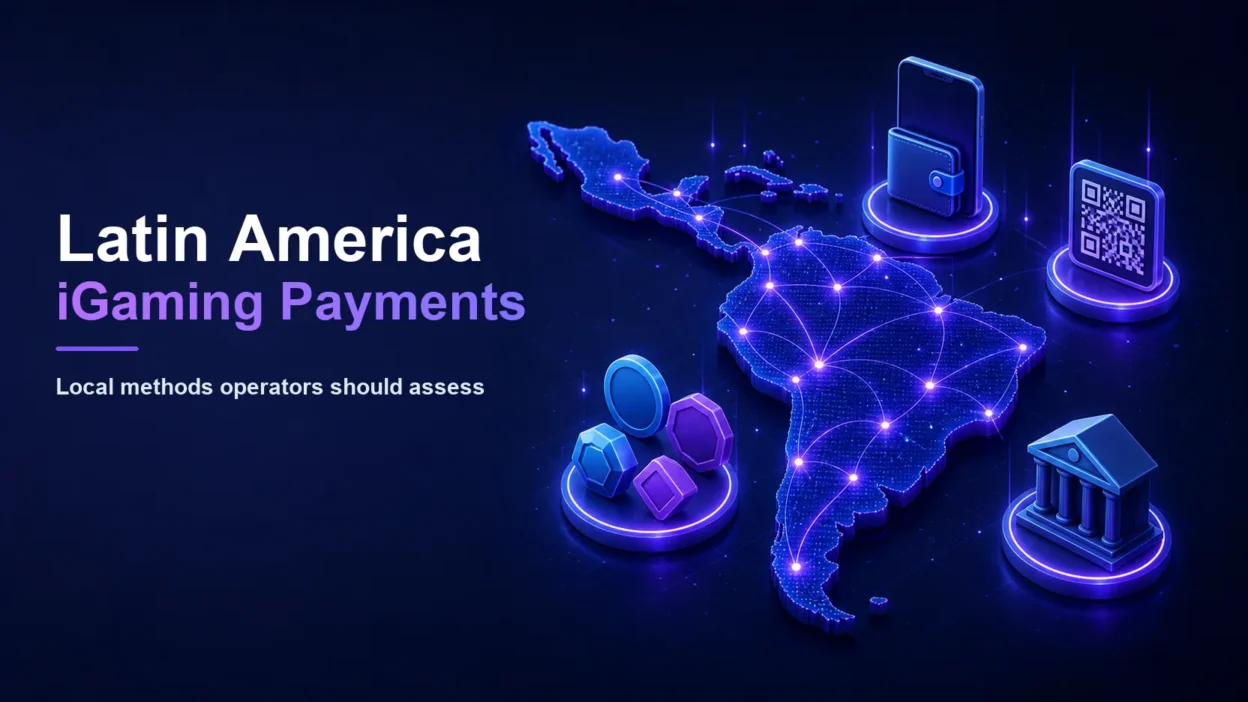
- Latin America iGaming payment methods must be selected by country, currency, bank behavior and player preference.
- Pix is central to Brazilian payment flows; PSE is relevant to Colombian account-to-account use cases.
- Local e-wallets and cash-linked methods may need different verification and settlement rules.
- Do not treat the region as one payment market or copy one country’s compliance workflow to another.
The Best Alternative Payment Methods (APMs) for Latin American iGaming — Latin America iGaming Payment Methods
Latin America iGaming payment methods vary by country, banking access, currency, settlement preference and customer trust. An operator planning a regional cashier should compare local bank rails, e-wallets, cards, cash-linked methods and crypto only after defining the markets it can serve and the controls required for each one.
We typically advise teams to prioritize a small, reliable method set over a crowded checkout. A payment method is useful only when authorization, customer support, reconciliation, refunds and withdrawals work together.
Key Definition: An alternative payment method, or APM, is a payment option outside a traditional card transaction, including bank transfers, instant-payment rails, e-wallets and other local methods.
Latin America iGaming payment methods by operating need
| Method family | Best fit | Questions |
|---|---|---|
| Instant bank rails | Fast deposits connected to local bank accounts. | What are limits, reversals and settlement states? |
| E-wallets | Players who prefer a stored balance or wallet login. | How are KYC and wallet ownership checked? |
| Cards | Broad coverage where acquiring and approval are reliable. | What are descriptor and chargeback controls? |
| Cash-linked methods | Customers with limited card or bank access. | How are vouchers, expiry and cash confirmation handled? |
Pix, PSE and local wallet integration
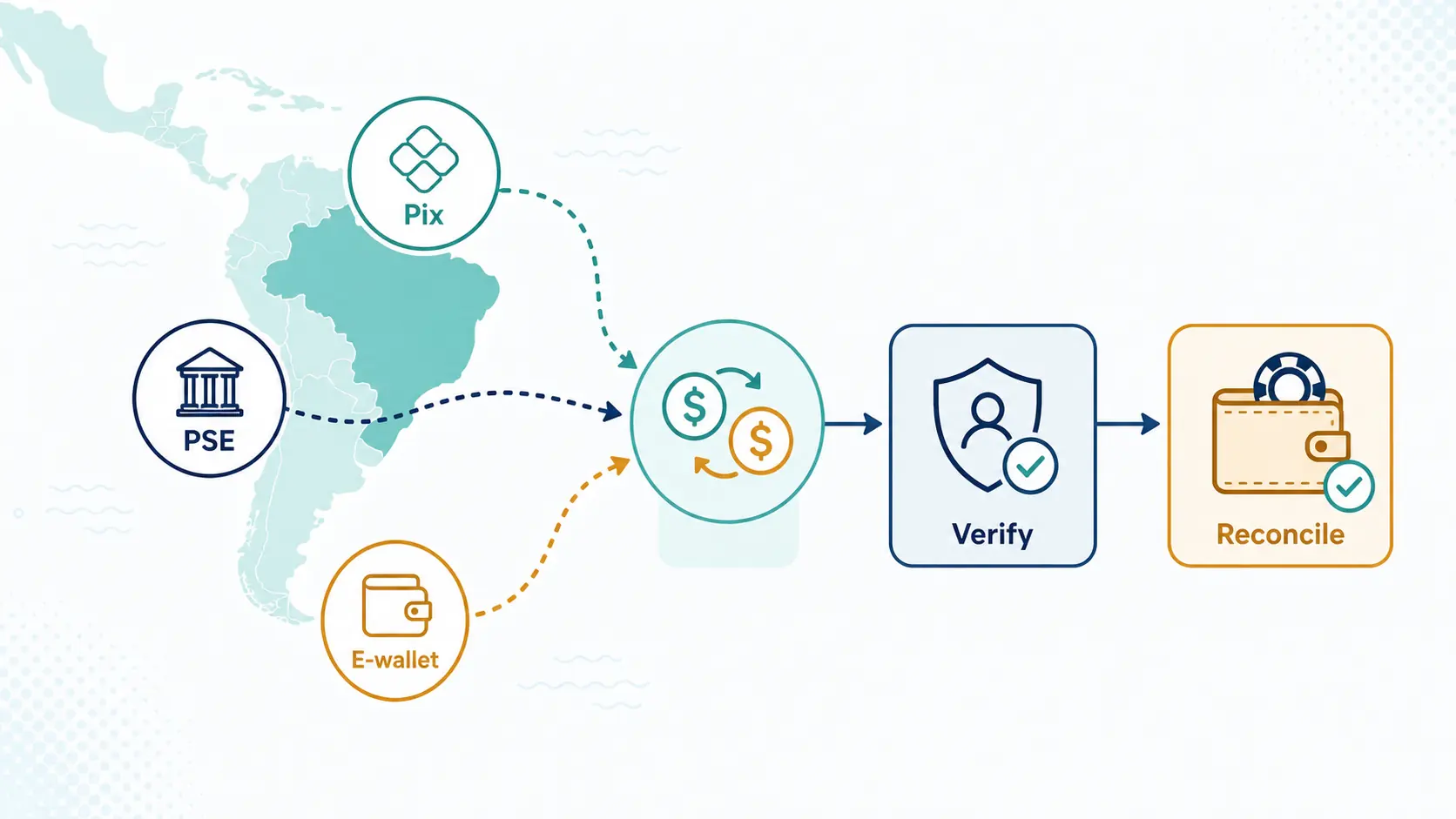
Pix is a Brazilian instant-payment rail; PSE is a Colombian online-banking payment option. They should not be treated as interchangeable because each has its own user journey, provider integration, account confirmation and reconciliation behavior. Local e-wallets similarly require clear ownership, limits, refunds and payout policies.
Implementation checklist: define country and currency, localize the cashier, show the correct legal terms, support the method’s status webhooks, reconcile provider references, test refunds and provide a method-specific support path.
Illustrative portfolio decision
Suppose an operator enters Brazil and Colombia. It might begin with Pix for Brazil and PSE plus a selected e-wallet route for Colombia, then add cards only after local approval and support data are stable. This is an illustrative rollout, not a provider recommendation or market forecast.
Failure scenarios
Common problems include displaying a method in a market where it is not available, crediting before final confirmation, showing the wrong currency, failing to reconcile a bank reference, and offering deposits without a matching withdrawal policy. Test each method through deposit, reversal, refund, withdrawal and support workflows.
Bottom line
Latin America iGaming payment methods should be selected country by country, with local player experience and operational control treated as one design problem. Start with reliable rails and expand after reconciliation and support are working.
Our platform helps connect payment choice with player lifecycle and CRM operations. Learn more about the AI-powered CRM for iGaming.
How to evaluate a regional rollout
Start with a country-by-country matrix that records currency, method availability, limits, settlement timing, refund path, withdrawal compatibility and support language. Add an owner for each integration and a date for reviewing provider availability and terms.
Cashier design should make the choice understandable. Show the method name players recognize, amount and currency, limits and what happens after authorization. If a method is unavailable, remove it or explain why.
After launch, compare deposit attempts, credited deposits, pending events, refunds and support contacts by method. A method with a good authorization rate but weak reconciliation may create more operating cost than it saves.