Risk Note
- AML red flags in iGaming are indicators for review, not automatic proof of criminal activity.
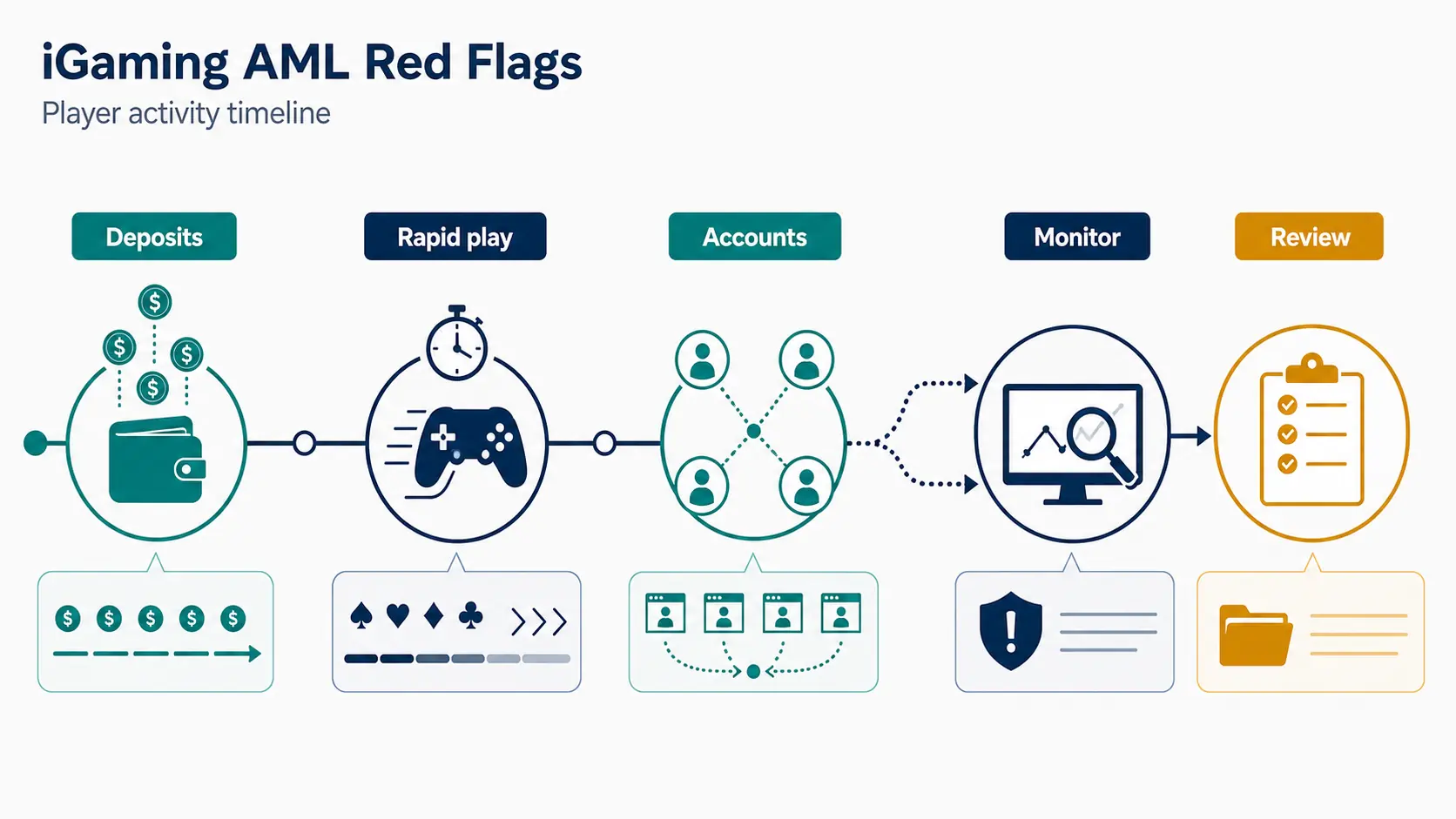
- Look at patterns across deposits, play, withdrawals, accounts and payment methods.
- Keep the reason for escalation and avoid tipping off a player through careless messaging.
- Use documented case workflows and trained investigators.
AML Red Flags Every iGaming Compliance Officer Should Know — AML Red Flags iGaming
AML red flags in iGaming are transaction or account patterns that may require enhanced review for money laundering, fraud or related financial crime risk. Structuring deposits, rapid play-and-withdraw activity and multiple accounts can be relevant signals, but none should be treated as conclusive without context and investigation.
We typically advise compliance teams to combine automated monitoring with human judgment. A red flag should create a case, preserve evidence and route the matter under the operator’s approved escalation and reporting procedures.
Key Definition: An AML red flag is a risk indicator that warrants further review under an operator’s anti-money-laundering program; it is not proof of wrongdoing on its own.
AML red flags iGaming teams should monitor
| Pattern | Why it may matter | Review question |
|---|---|---|
| Structuring deposits | Repeated amounts or timing may be designed to avoid a threshold. | What is the customer purpose and source of funds? |
| Rapid play and withdrawal | Funds move through the account with limited gaming activity. | Does the behavior match the account profile? |
| Multiple accounts | Related identities or devices may indicate control or bonus abuse. | Are the connections explainable and permitted? |
| Payment mismatch | Depositor, player and withdrawal recipient do not align. | Who owns the payment method? |
From alert to case
- Capture the alert, data source and rule version.
- Review the player, payment and account history.
- Separate false positives from unresolved concern.
- Request approved evidence without revealing sensitive monitoring logic.
- Escalate under the AML program and record the decision.
For an illustrative case, several deposits arrive over a short period, the player performs little activity and requests withdrawal to a different method. The pattern may be a red flag, but the investigator still needs context, account history and payment ownership before deciding the next action.
Bottom line
AML red flags in iGaming should trigger proportionate review, not automatic accusation. Connect monitoring to player, payment and case data, and preserve a clear reason for every decision.
Our platform helps teams bring risk signals and player-lifecycle context into operational workflows. Explore the AI-powered CRM for iGaming.