
Operator Playbook
- Mass payout solutions for iGaming affiliates should begin with approved, reconciled commission records.
- Choose crypto, fiat wire, e-wallet or a mix based on partner needs, jurisdiction and controls.
- Automate batching, approval, tax records, failure handling and payment confirmation.
- Keep a payout ledger that finance and partners can reproduce.
How to Handle Mass Payouts to iGaming Affiliates Efficiently — Mass Payout Solutions iGaming Affiliates
Mass payout solutions for iGaming affiliates help operators pay many approved partners through a controlled batch instead of processing each transfer manually. The important design is not simply sending more payments: it is making sure the commission source is approved, the recipient is correctly identified, the currency and tax treatment are clear, and every result is reconciled.
We typically advise teams to separate commission calculation from payment execution. A partner payout should enter the queue only after the underlying event, reversal window and approval status are complete.
Key Definition: A mass payout workflow is a controlled process that batches approved recipient payments, applies required checks and records each instruction, result and exception.
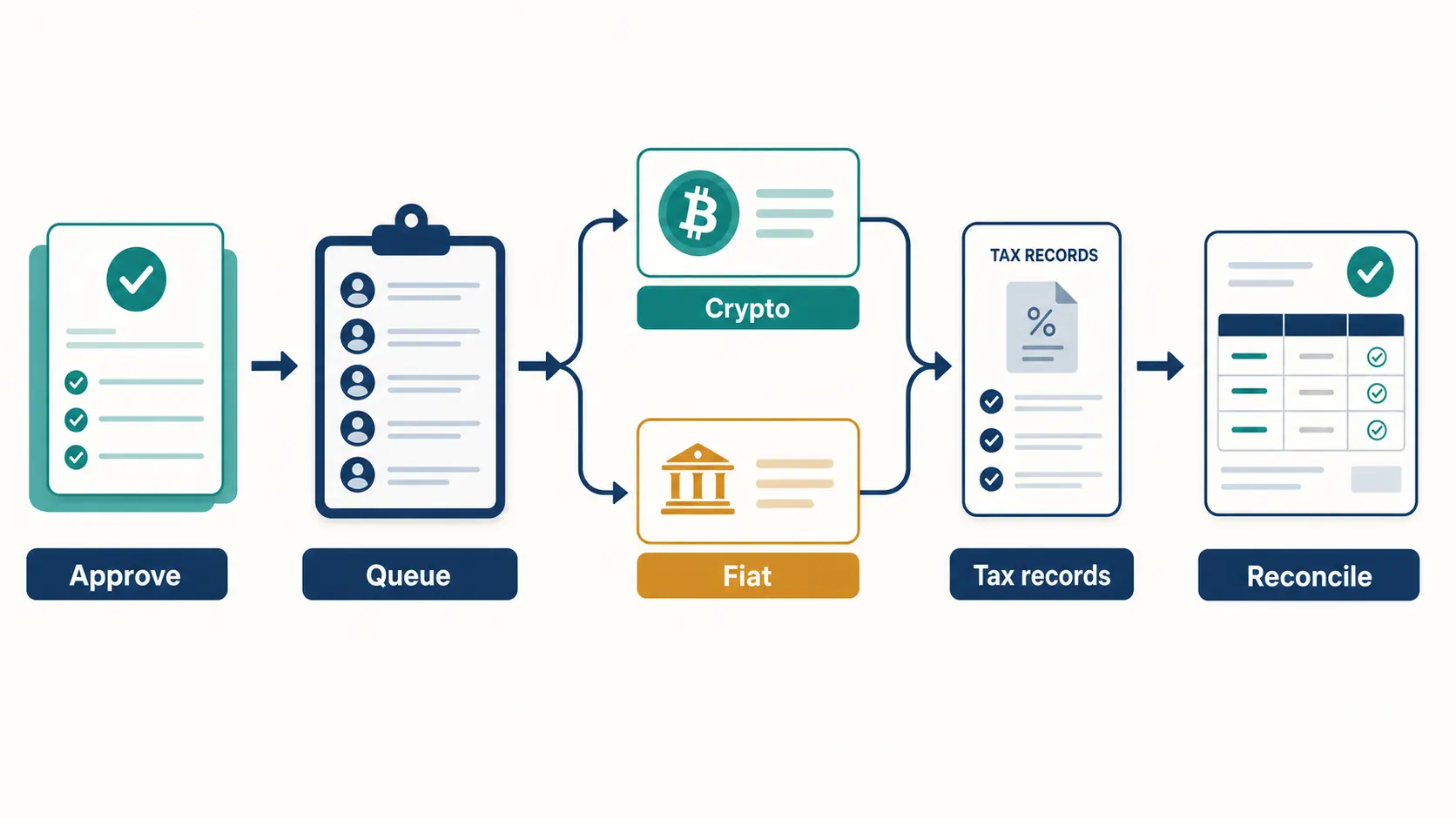
Operator guidance for mass payout solutions igaming affiliates in iGaming
Mass payout solutions for iGaming affiliates
| Stage | Control | Output |
|---|---|---|
| Approve | Confirm commission, reversals and partner eligibility. | Approved payout record. |
| Queue | Group by currency, method, date and risk state. | Reviewable batch. |
| Execute | Require authorization and idempotency. | Payment instruction. |
| Resolve | Handle failures, returns and recipient changes. | Exception case. |
| Reconcile | Match provider settlement to ledger. | Closed payout batch. |
Crypto versus fiat wire payouts
Crypto can offer a different settlement path and may suit partners who have the required wallet and compliance setup. Fiat wires can be familiar for finance teams but may involve bank fees, cut-off times, intermediary details and country-specific reporting. Neither route is automatically simpler. Compare the recipient experience, cost, reversal capability, screening and reconciliation fields.
Tax treatment varies by entity, jurisdiction and recipient status. Do not assume that the payment method determines the tax obligation; route the question to finance and qualified advisers.
Illustrative batch calculation
A batch contains 120 approved payouts totaling €48,000. The operator holds back €2,000 for documented adjustments and processes €46,000. If three transfers fail, the closed batch should show 117 paid records, three exceptions and the reason for each—rather than only reporting the successful total. The numbers are illustrative.
Implementation checklist: verify recipient identity, lock the batch, require dual approval for high-value changes, prevent duplicates, capture provider references, notify partners and store the settlement file.
Failure scenarios
Common failures include paying a reversed commission, using outdated bank details, sending a duplicated batch after a timeout, mixing currencies, and closing a batch before returned funds are matched. Build a retry process that is safe to repeat and requires a reason for manual changes.
Bottom line
Mass payout solutions for iGaming affiliates are efficient when the queue is built from approved data and every exception is visible. Automate repetition, retain human approval for risk decisions and make the payout ledger the shared source of truth.
Our platform helps teams connect affiliate commissions, player events and finance workflows. Explore the AI-powered CRM for iGaming.
Recipient and tax-data controls
Recipient details should be verified before a batch is locked, not changed casually after execution begins. For a bank payout, that may mean account and beneficiary validation; for crypto, it may mean wallet and network confirmation. Store the verification result and effective date.
Tax records should be generated from the approved payout record and recipient status, not reconstructed from a bank statement months later. Finance should answer which commission events created the amount, which adjustments were applied and which transfer reference closed the obligation.
Give affiliates a clear vocabulary: approved, queued, processing, paid, failed, returned or under review. This reduces support tickets and prevents a temporary provider timeout from being interpreted as a missing commission.